


Contact
The New Propulsion Era: The Most Energy-Conscious Superyachts
Environmental performance in the superyacht sector is no longer limited to marketing claims. Recent launches show a clear shift toward hybrid propulsion, fuel cells, alternative fuels and measurable reductions in energy use. From large-scale hydrogen systems to high-voltage battery banks on sub-30-metre sailing yachts, several projects demonstrate how builders are addressing fuel consumption, emissions and onboard energy management in practical terms.
Below is a technical overview of superyachts where engineering decisions — not just materials — define their environmental profile.
Breakthrough
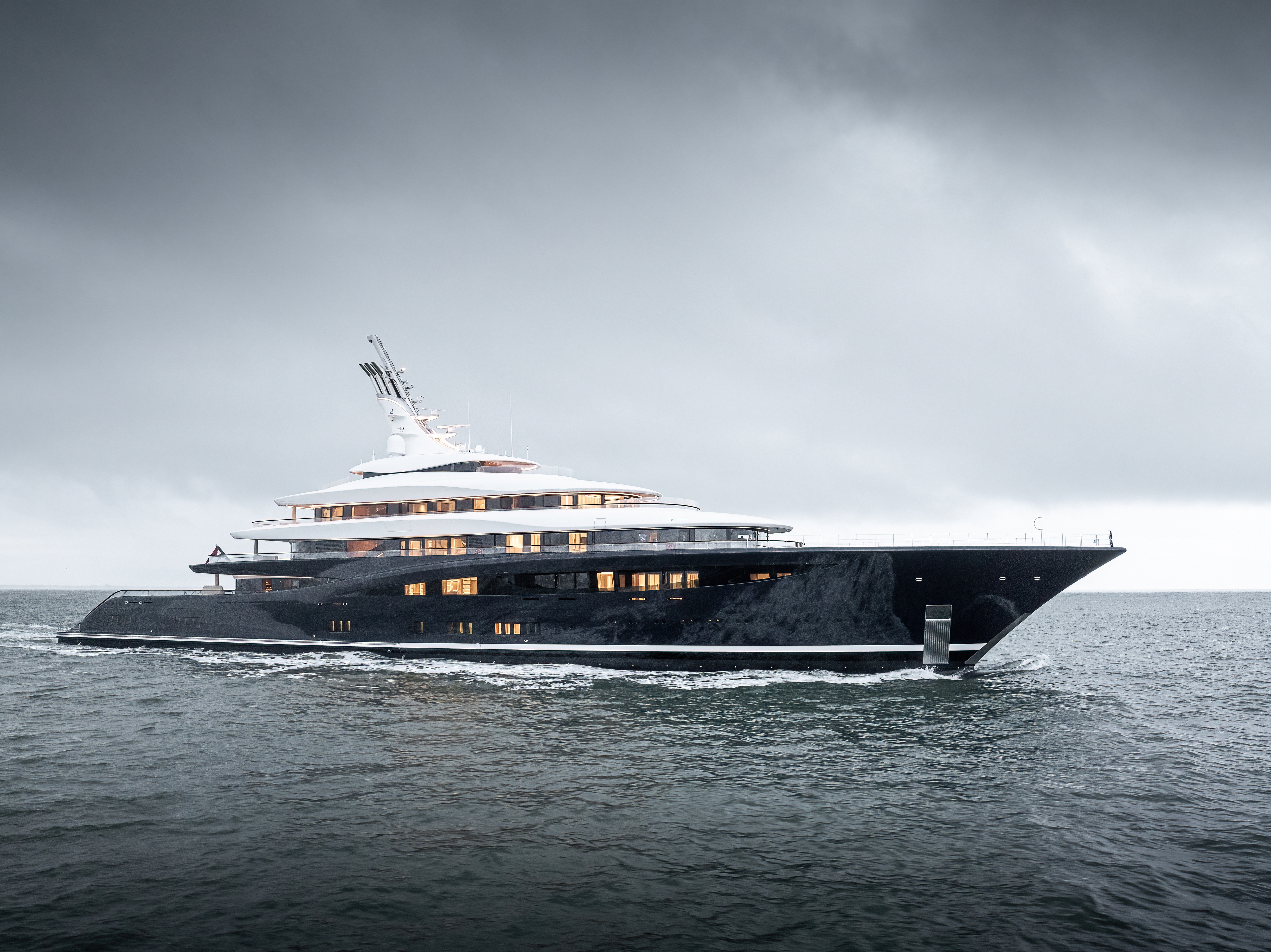
Delivered in 2025 by Feadship, the 118.8-metre Breakthrough is the first superyacht equipped with a liquid-hydrogen fuel-cell system designed for hotel loads and low-emission coastal cruising.
Her 3.2MW fuel-cell installation runs on cryogenic liquid hydrogen stored at –253°C. When operating on hydrogen, the system produces electricity with water as the only by-product. In mid-2025, she became the first superyacht to bunker liquid hydrogen in the Netherlands.
The yacht retains a hybrid diesel-electric configuration, allowing switching between fuel cells and conventional generators. While not intended for long ocean crossings under hydrogen alone, the system significantly reduces emissions linked to hotel loads — a segment that can account for the majority of annual onboard energy consumption.
Nausicaä
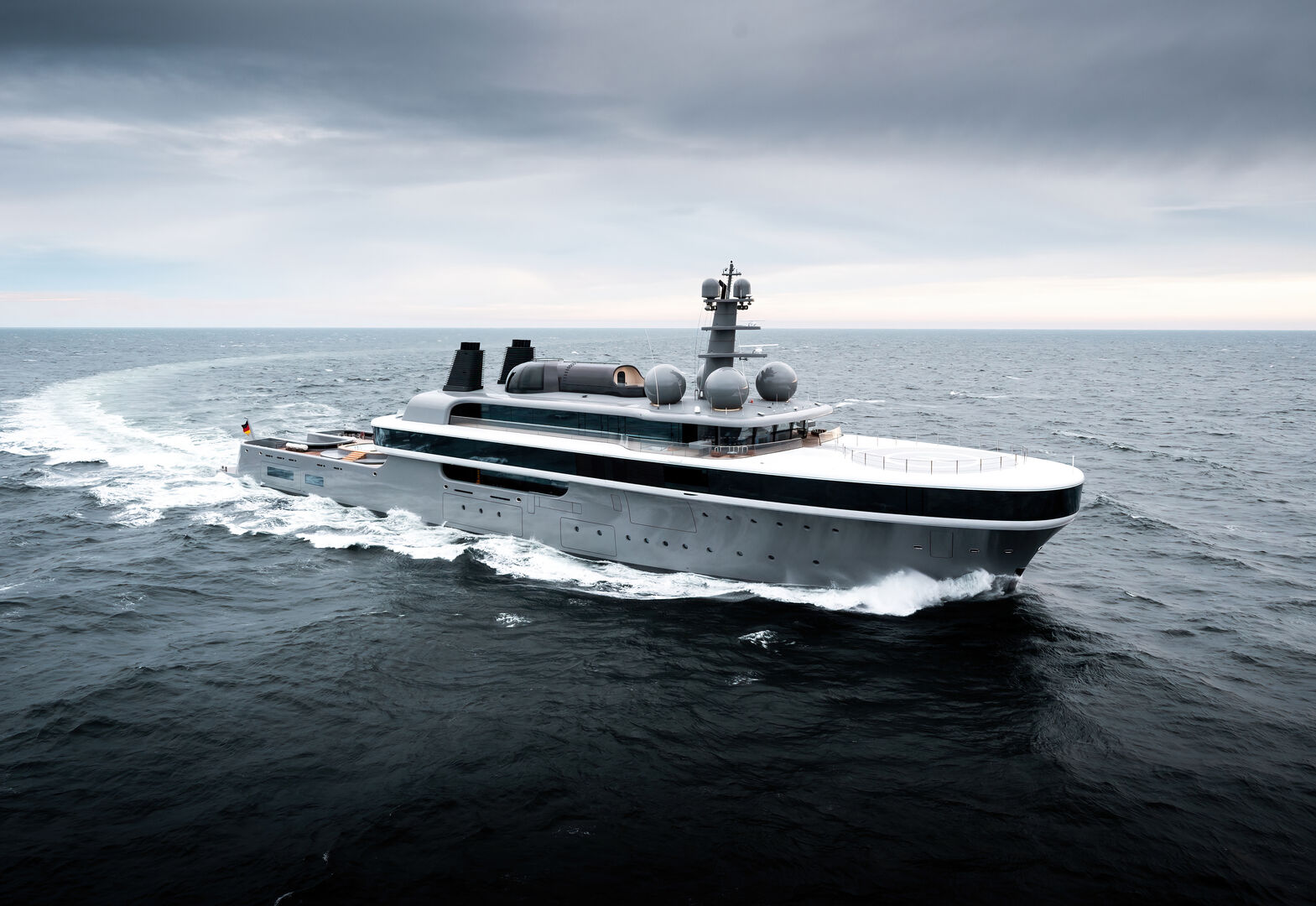
Under construction at Lürssen, the 114.2-metre Nausicaä integrates methanol fuel cells alongside conventional diesel engines.
The yacht is fitted with two 500kW methanol fuel cells supplied by Freudenberg. At approximately seven knots, the system is projected to deliver up to 1,000 nautical miles of operation in reduced-emission mode. This approach enables partial substitution of fossil fuels without requiring a full redesign of propulsion architecture.
Designed externally by Marc Newson, the yacht also incorporates extensive glazing, which increases natural light and reduces dependence on artificial lighting during daytime operation.
Black Pearl
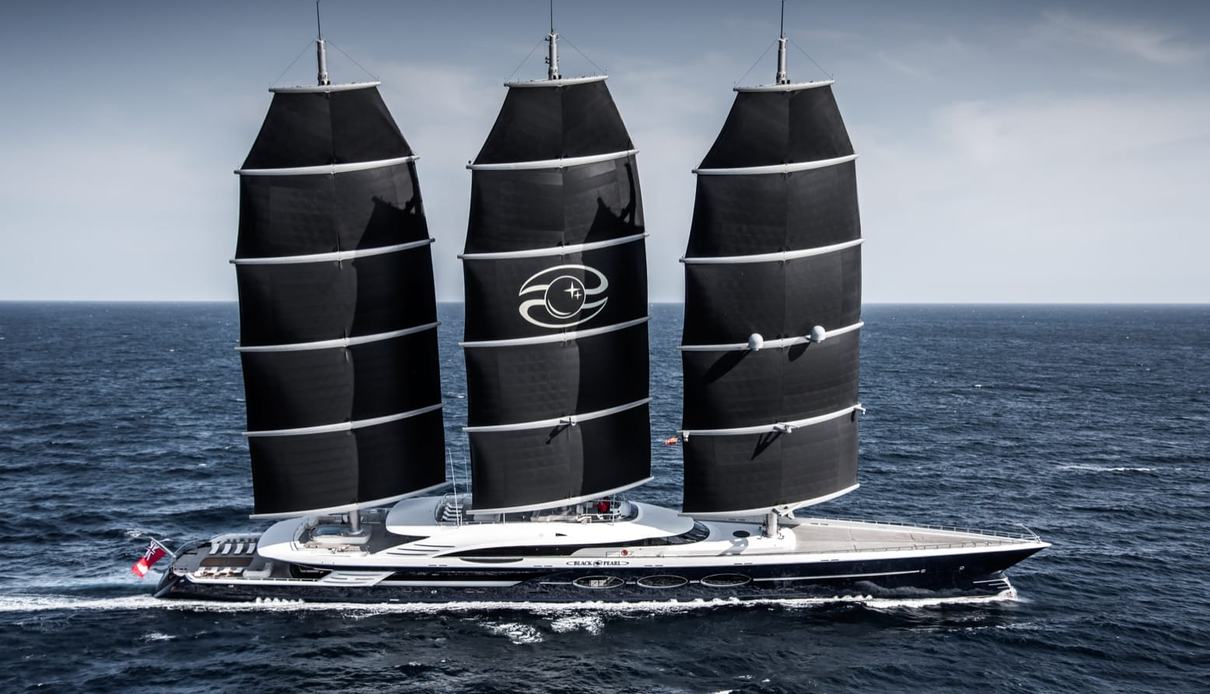
The 106.7-metre sailing yacht Black Pearl, built by Oceanco and delivered in 2018, combines wind propulsion with energy recovery systems.
Her DynaRig sailing platform allows large sail areas to be deployed efficiently, reducing reliance on engines during passages. Controllable-pitch propellers connected to shaft generators feed energy back into the yacht’s electrical system while under sail. This recovered energy can cover significant portions of the hotel load.
Since entering the charter market in 2024, the yacht has offered an operational mode prioritising sail power and electric motors, limiting combustion-engine use when feasible.
Seawolf X
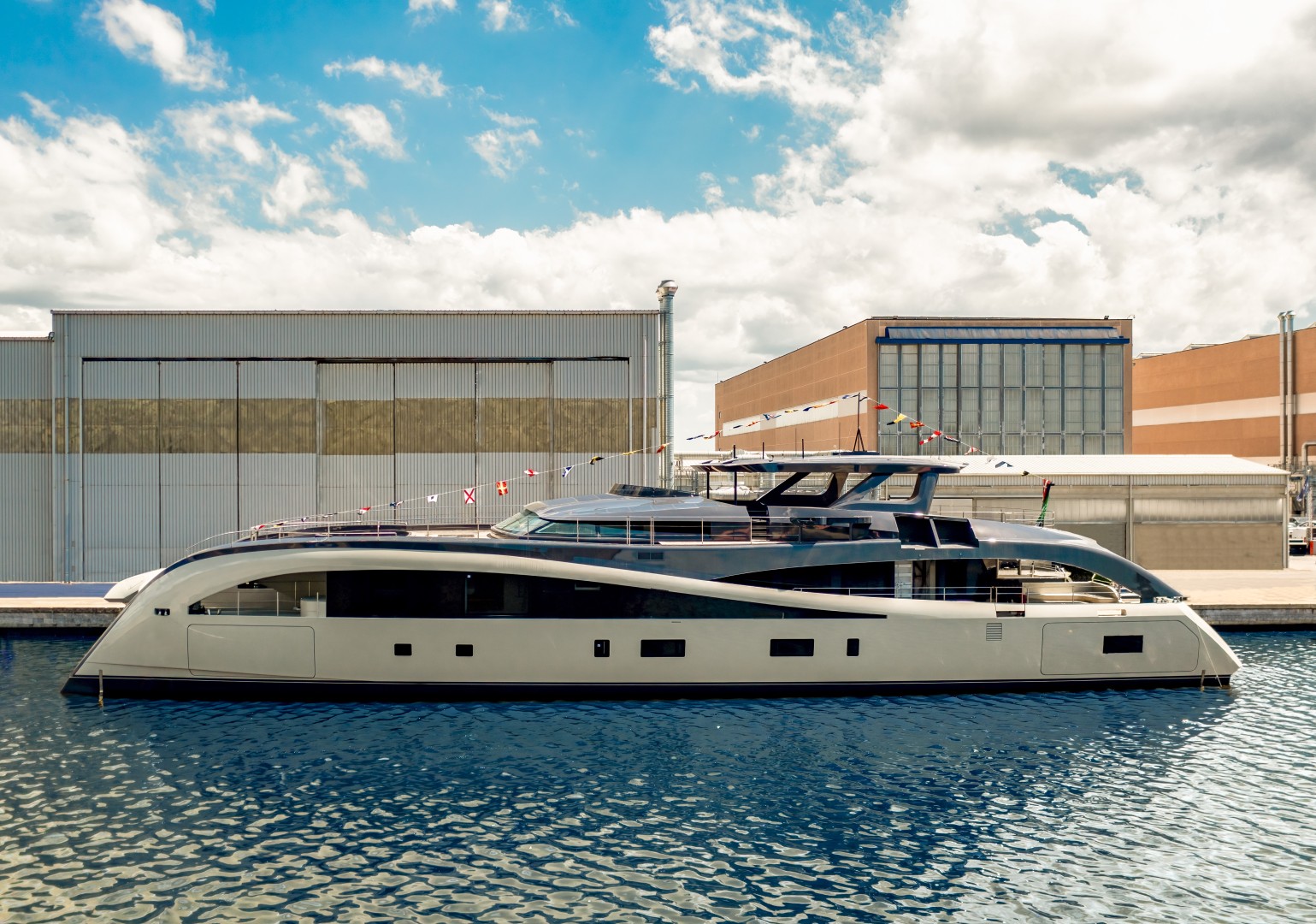
Built by Rossinavi, the 42.8-metre Seawolf X adopts a twin-hull aluminium platform to reduce drag and fuel consumption.
Compared to conventional monohull yachts of similar size, the catamaran configuration is estimated to reduce fuel burn significantly. The yacht is equipped with approximately 150 square metres of solar panels and large battery banks, supporting onboard systems and lowering generator dependency.
Notably, the design omits a traditional stabilisation system due to inherent catamaran stability, cutting additional energy demand. Interior materials include recycled and locally sourced elements.
Artefact
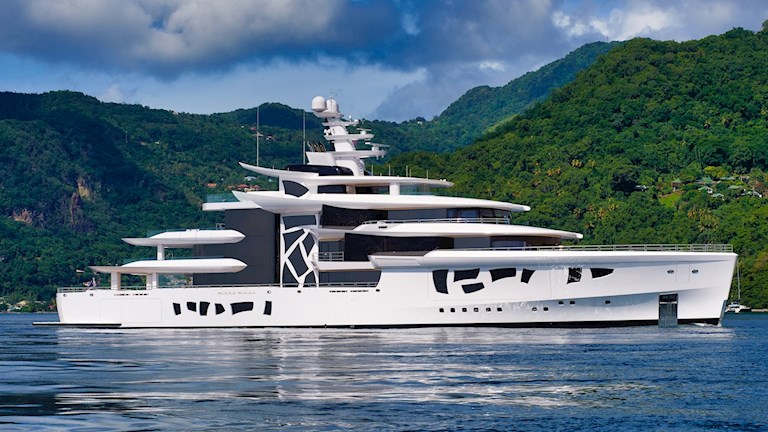
Delivered in 2020 by Nobiskrug, the 80-metre Artefact was among the first yachts to comply with IMO Tier III emissions regulations.
Her hybrid diesel-electric propulsion integrates lithium battery storage, allowing periods of operation without combustion engines. According to the manufacturer, the system can reduce overall energy use and emissions by roughly 30 per cent.
Artefact also incorporates solar panels, wastewater recycling and custom propellers designed to minimise vibration and underwater noise. Despite a volume close to 3,000 GT, onboard acoustic management was prioritised to reduce environmental disturbance.
Nyumba GT
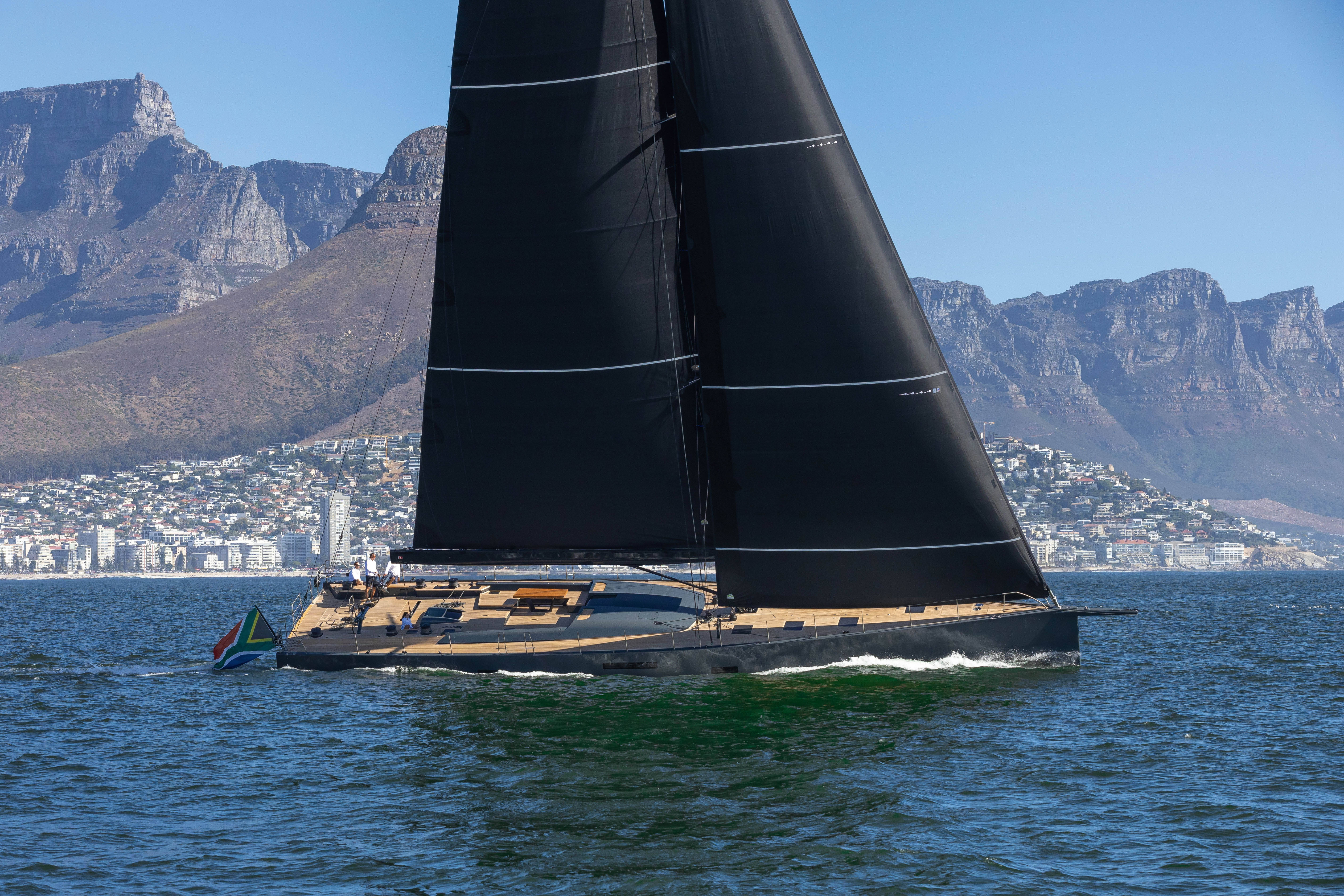
The 29.3-metre Nyumba GT, built by Southern Wind, is one of the first sub-30-metre sailing yachts to adopt a high-voltage hybrid propulsion and energy storage system.
Designed by Nauta Design with naval architecture by Farr Yacht Design, the yacht can generate electrical power while under sail, covering hotel loads and reducing generator runtime.
The integration of hybrid technology at this size marks a shift toward applying large-yacht solutions to performance cruisers below 30 metres.
Yersin
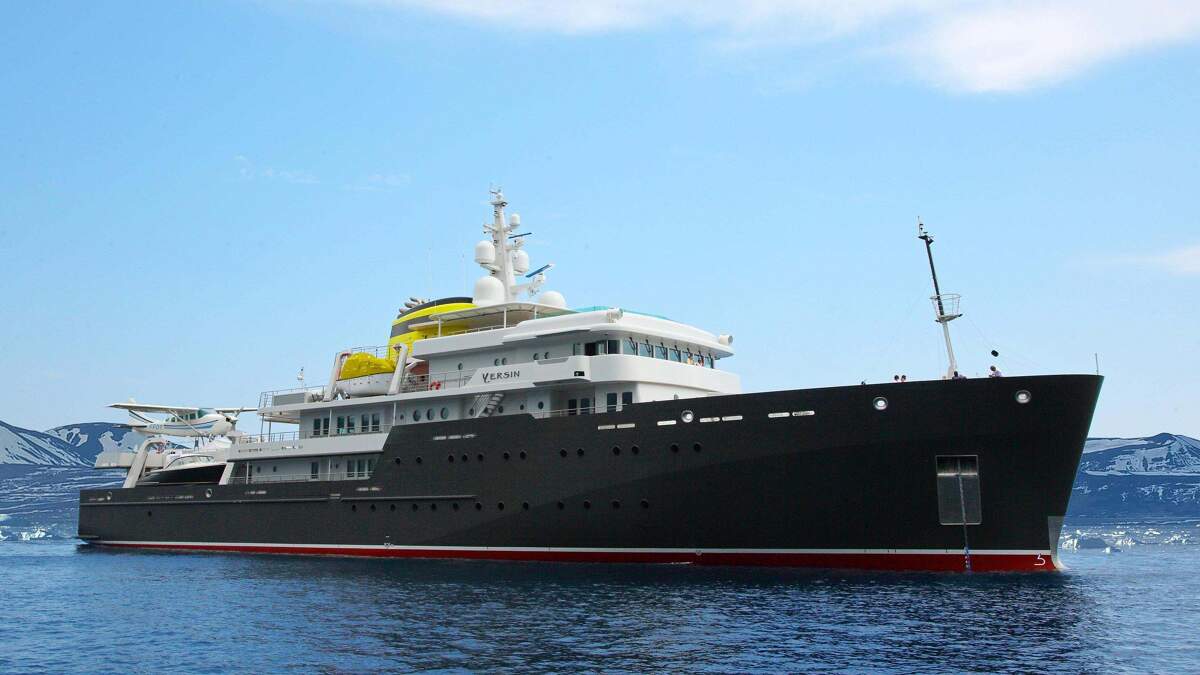
Built by Piriou, the 76.6-metre explorer Yersin was designed for extended voyages and scientific collaboration.
Constructed from approximately 95 per cent recyclable materials, she features non-biocide silicon antifouling coatings and advanced exhaust filtration systems capable of removing the vast majority of NOx, SOx and soot particles. Dynamic positioning reduces anchor damage in sensitive seabeds.
Her long-range capability — up to 15,000 nautical miles — allows expedition cruising with fewer logistical stops.
Project Secret

Currently in build at Tankoa Yachts, the 52-metre Project Secret incorporates hybrid propulsion aimed at reducing fuel consumption by up to 59 per cent at cruising speed.
Designed by Philippe Briand with naval architecture by Vitruvius Yachts, the yacht features a streamlined hull to lower resistance. The system is engineered to support full hotel operations for several hours without engaging main engines.
Contigo
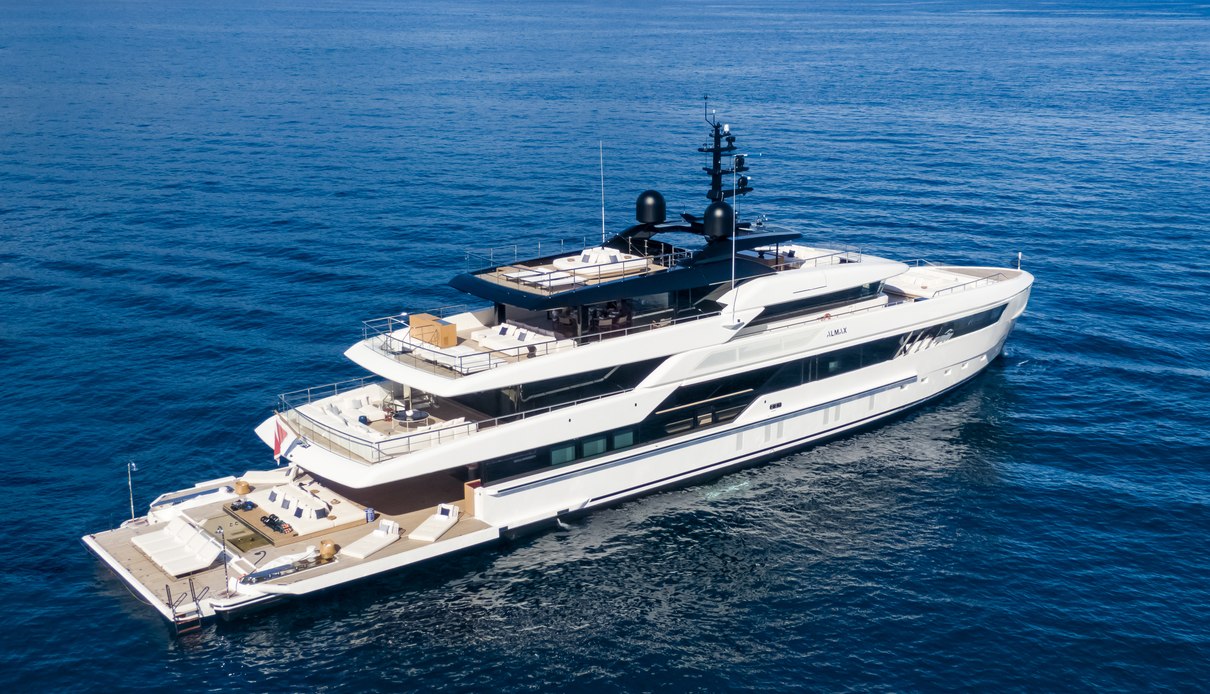
Launched as the first 50Steel model by Sanlorenzo, Contigo integrates a fuel-cell system capable of converting biomethanol into up to 100kW of electrical power.
This allows the yacht to remain at anchor without running traditional generators, significantly reducing emissions during stationary operation. The builder estimates the system can cover the majority of typical onboard usage profiles.
The design also relocates the engine room to create an aft “Ocean Lounge” space, demonstrating how propulsion layout changes can influence both efficiency and onboard arrangement.
A measurable shift
Across these projects, the focus moves beyond surface-level sustainability claims. Hydrogen, methanol and biomethanol fuel cells are entering operational service. Hybrid systems are becoming standard rather than experimental. Solar arrays, battery banks and hydrodynamic optimisation are now integrated at the design stage.
While global infrastructure for alternative fuels remains limited, these yachts indicate that technical solutions are advancing faster than many predicted. The next phase will depend less on engineering feasibility — and more on fuel supply networks, regulatory frameworks and owner willingness to adopt new operational models.